
/PROJECT
JP Morgan User Group Management
User Group Management is a JP Morgan Digital Platform web app which enables admins to create and edit groups of users. Admins can then assign customized apps and platform preferences to these user groups.
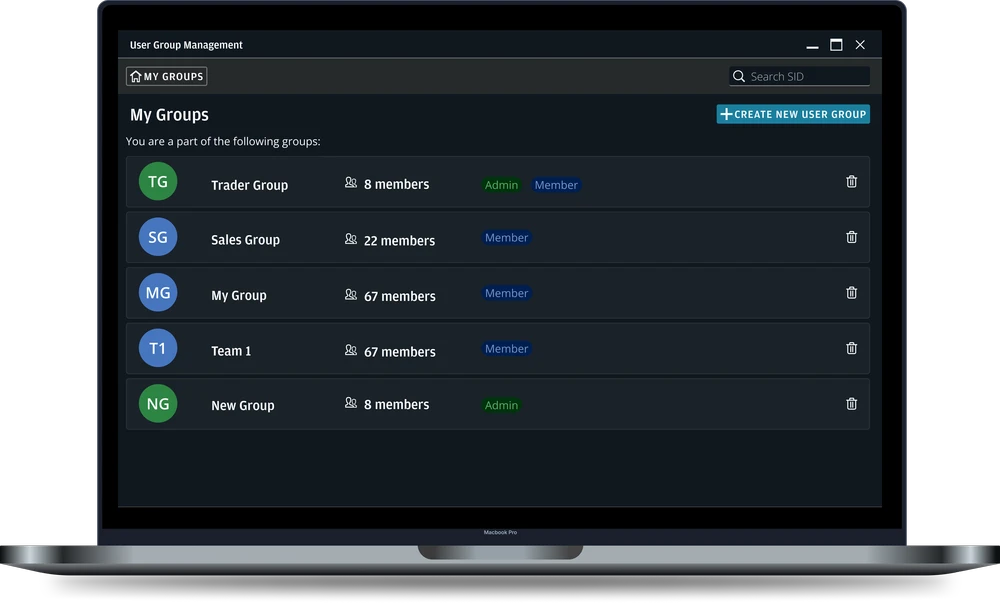
The User Group Management app is designed to give admins the power to create and manage groups themselves. This saves time and expenses for admins and support teams, and it allows admins to give more granular and customized settings to their teams.
My role in this project was UX design, UI design, and assisting with feature priorization.
My tools were Figma, Whimsical, Confluence, Jira, and Zoom.
Company: JP Morgan Chase.
The Problem
The Digital Platform Desktop (DPD) is an app within JP Morgan that is used by thousands of users, consisting of traders, bankers, sales reps, and more. Each different type of user has their own needs and requirements. Product teams, engineers, and admins spend a lot of time in communication with the DPD team to create user groups. Once they work with DPD to create these groups, they then need to continue working together to set preferences for these groups, manage these groups, and share certain apps with these groups. This is expensive and frustrating for both the admins and the DPD support team.
The Solution
The Digital Platform Desktop (DPD) will empower its administrative users by giving them the power to create and manage their own user groups. They will then be able to add and remove members, set preferences, and assign customized apps to their groups. This will be cost effective for both DPD and its users, and will make DPD a more user-friendly and technologically advanced product.
For this project, user research was mostly led by our team’s product managers and engineers. Engineers had been getting an influx of support messages and calls asking for help to set up user groups. Product ran focus groups with known users to gauge needs, and ask about barriers to feature adoption. From this, we found:

Users Research
The Digital Platform Desktop has internal users from JP Morgan across many different lines of business. This includes traders, bankers, sales reps, and more. Because the User Group Management feature is an admin tool, this feature would serve tech teams, product managers, support administrators, and even business end users. Some key teams we found who would adopt this feature were:
Synergy - 130 users
Synergy acquiring NRG- 1000+ users
Quantitative Research - 236 Sales Users (2 people will need Publish Access
Competitive Research
No competitors were found, but some different lines of business within JPM may have built other sharing mechanisms that require the creation of user groups. We will speak to these lines of businesses to find if we can converge on patterns and components to be used throughout the firm.
High Manual Overhead
The reliance on email requests results in significant manual administrative work for the DPD/UI Services development team. This manual process is time-consuming and inefficient.
Lack of Visibility
There is limited visibility into the current composition of user groups, making it difficult for administrators to manage and audit group memberships effectively.
Absence of Self-Service Capabilities
The current process lacks self-service capabilities, preventing Administrators from making quick and efficient changes to user groups as needed.
Stakeholder Frustration
The longer turnaround times for group amendments can lead to frustration among stakeholders who require timely updates to user groups.
Increased Dependency on Team Hours
The current process increases the dependency on team hours, leading to longer turnaround times for group amendments. This dependency can strain resources and limit the team's capacity to focus on strategic initiatives.
Delayed Feature Releases
The manual nature of the process reduces the DPD team's ability to quickly release new features to a smaller low impact audience group(s). This delay can hinder the organization's agility and responsiveness to market demands.
Lack of Autonomy
Administrators lack the autonomy to make necessary changes independently. This dependency on the DPD team can lead to frustration and decreased satisfaction among stakeholders.
Competitive Research
Before creating my mid and high fidelity wireframes, I researched other competitors and neighbors in the space. I drew inspiration from their layouts, functionality, and language.
When doing competitive research, I like to look to tools that my users are already using in their everyday lives. This helps with learnability and usability. For this project, Teams and Outlook were big inspirations to me as they actually both have user group creation and management features.


After gathering and analyzing research, I was able to work with my product team to produce a list of features. I then got to work on mid fidelity mockups, which I designed using Whimsical.
Group Creation
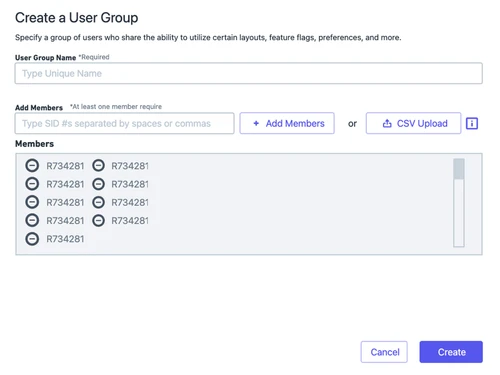
Users need the ability to create new group. They need to be able to give the group a name, and bulk add users. We refer to users by their SID numbers at the firm.
Group Management Interface
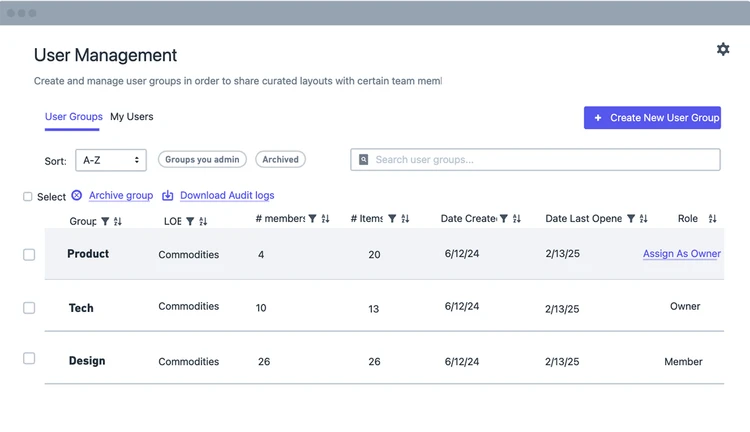
Users need to be able to view all their groups in one place. They must be able to delete the groups, make new ones, and access each group’s details.
User Group Administration
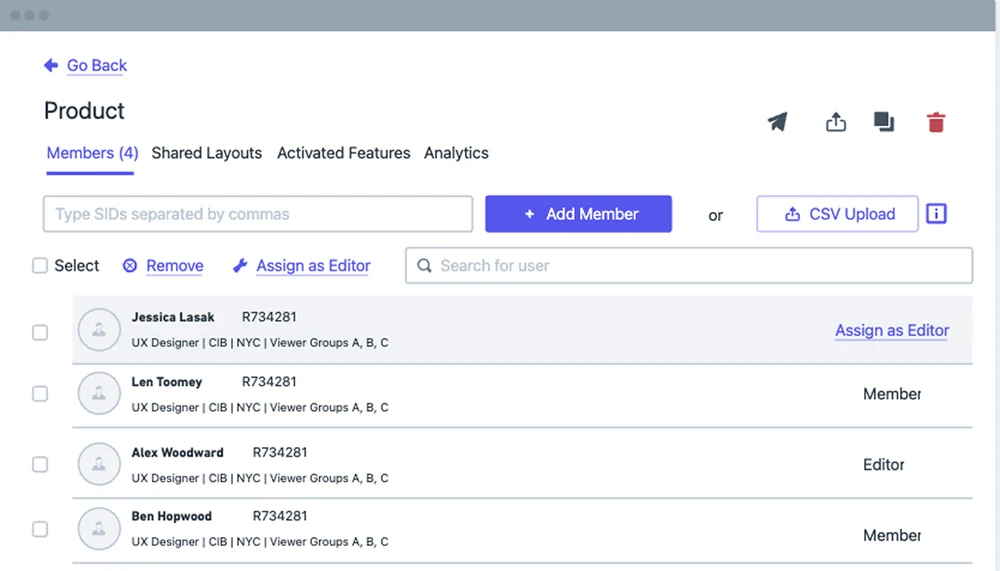
Users must be able to do administrative work like adding and removing members, and assigning members as more editors/admins.
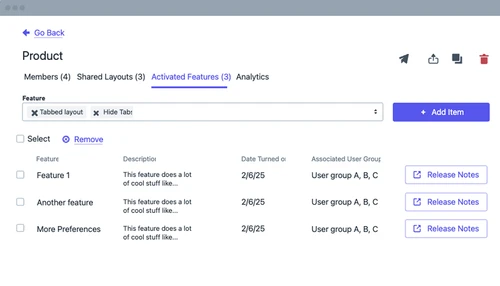
Feature and Preference Assignment
Each group can be assigned features and user preferences to its members. Admins need an interface to do so.
After meeting with my product and development teams to review the mid fidelity designs, I got to work on high fidelity. Keeping in mind the features we prioritized during the session based on cost and need.
Users at least needed to be able to create and manage groups, so that they can utilize another group-dependent feature on our platform (Shared Layouts).
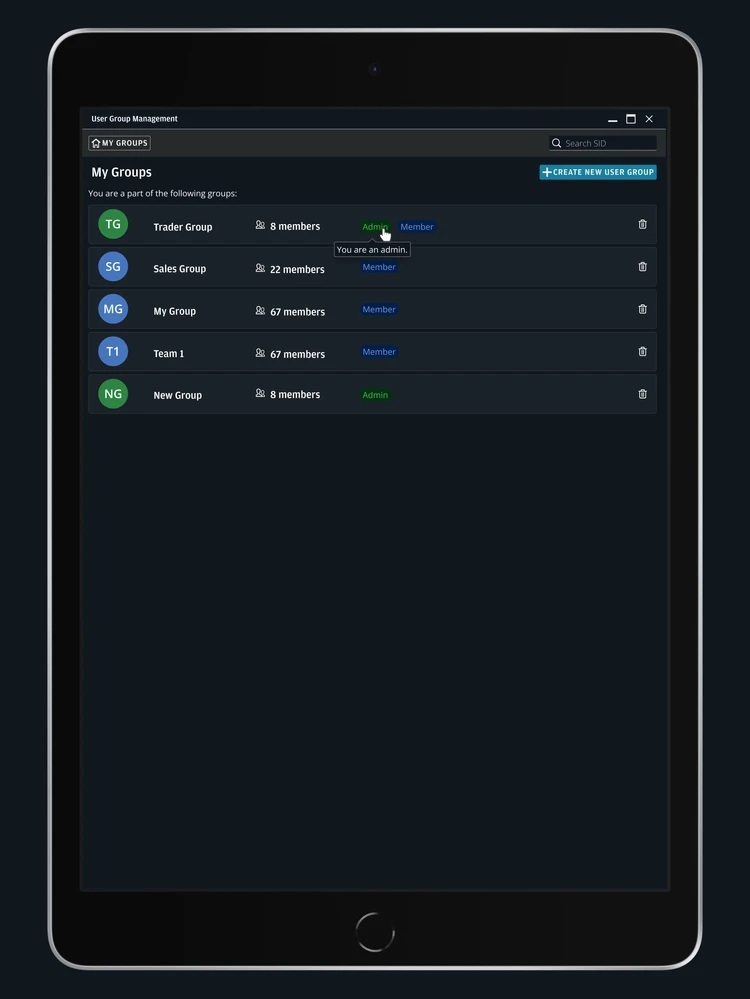
User Group Administration
Users must be able to do administrative work like adding and removing members, and assigning members as more editors/admins.
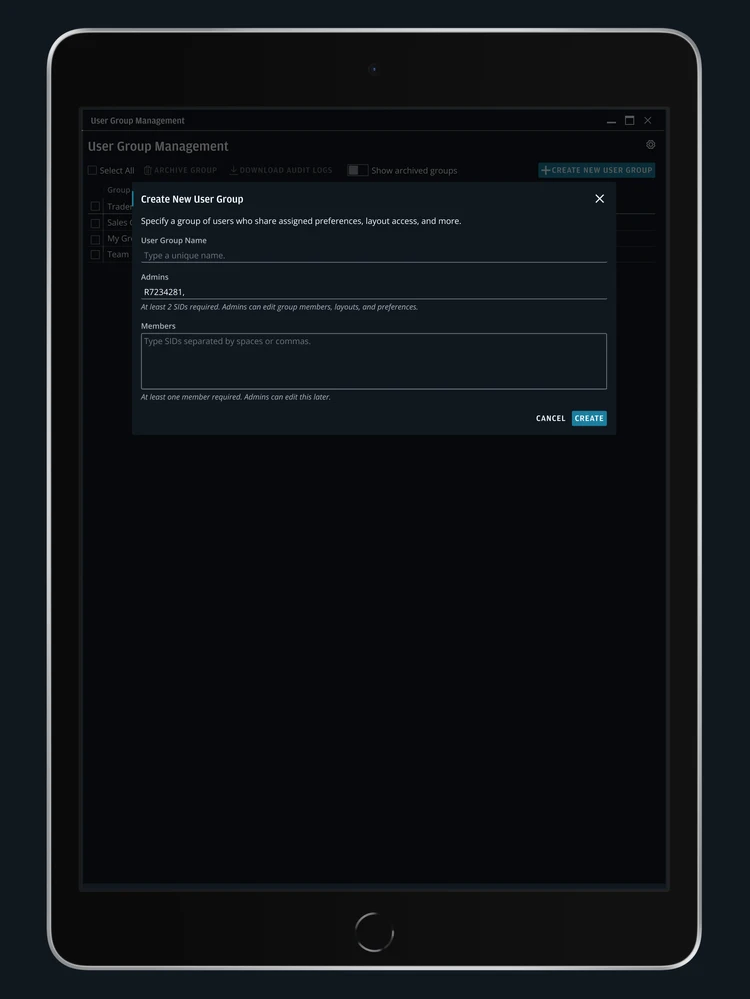
Group Creation
A modal for admin users to create new groups. They can name the group, add members, and assign admins to manage it.
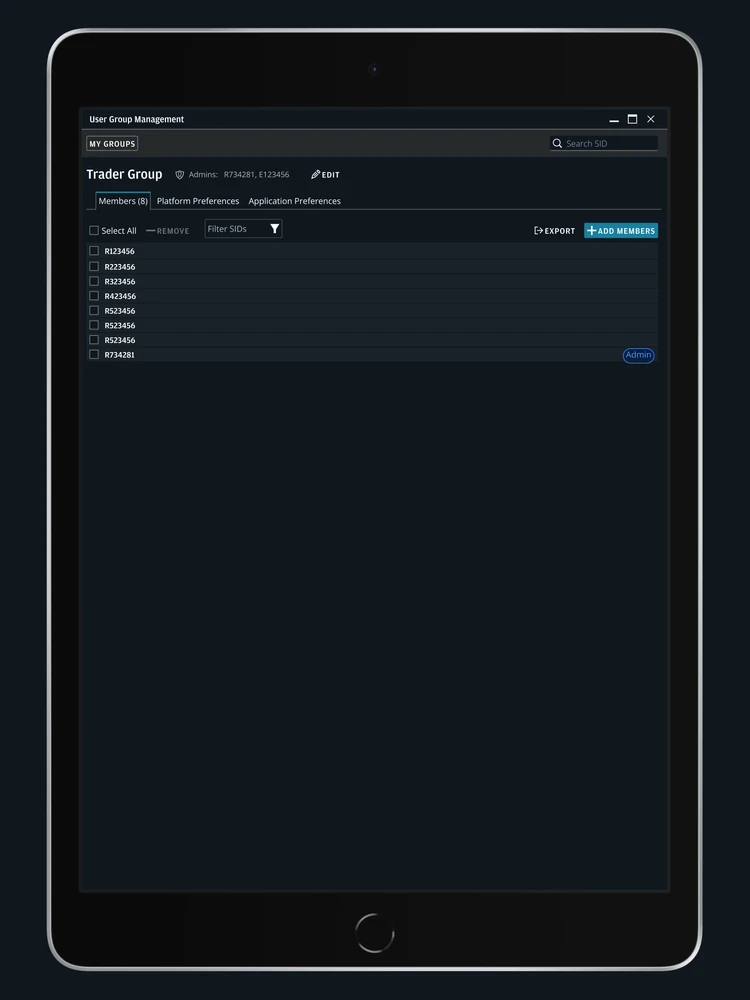
Group Members Page
A section within the group details page which shows all of its members and gives admins the tools to edit members, the group title, or the admins.
After ensuring our users had the basic functionalities to create and manage groups, I worked together with my product and development team to prioritize more features.
Group Creation
A modal for admin users to create new groups. They can name the group, add members, and assign admins to manage it.
Group Members Page
A section within the group details page which shows all of its members and gives admins the tools to edit members, the group title, or the admins.
Search for User
Allows admins to search for users within their management group so they can help support their team members
Reduces the need for DPD support
Global search bar so user can search from any page
Uses a dropdown to:
Simplify the UI and tech overhaul
Allow the user to quickly search without leaving the main page
Allow for more powerful searching with predictive autosuggestions
User Details
Shows all of the groups a user belongs to
Gives more information about users, for example if they have a “Manager” role within the platform
Allows admins to add or remove group memberships
The User Group Management app has been built and is currently being used by users. As more users get acquainted with it, we will hold feedback sessions. We will iterate on this app and continue to improve it as we receive more feedback! I am currently designing more improvements that will be built in an agile sprint cycle. Feel free to ask me more if you are curious!